
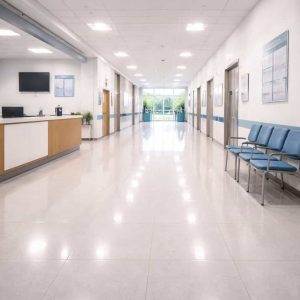
Clean Tiles and Public Health: A Government Responsibility

Clean tiles may seem like a small detail in public spaces. But they play a quiet and important role in protecting public health, which is why many institutions rely on professional tile cleaning services to maintain safe and sanitary environments. Floors, walls, and surfaces covered in tile are common in hospitals, schools, transit stations, public housing, and government offices. These surfaces are built to last. They are also built to be cleaned. Keeping them clean is not just about appearance. It is a matter of public responsibility.

Public Spaces and Daily Exposure

Governments are responsible for creating safe environments for the people they serve. That duty includes maintaining public buildings to reduce the spread of disease. Tiles, especially in high-traffic areas, can collect dirt, bacteria, mold, and other harmful substances. When cleaning is delayed or inconsistent, these surfaces can become sources of infection.
People interact with public surfaces every day. They walk across tiled floors. They use tiled restrooms. Children sit and play in spaces with tiled walls and corridors. These everyday interactions make cleanliness essential. Regular cleaning reduces risks that are often invisible but real.

Hospitals and Infection Prevention

Hospitals offer the clearest example of the link between tile maintenance and health. Tile floors and walls are widely used in medical settings because they are durable and easy to disinfect. But even the best materials cannot protect patients on their own. They require routine cleaning, proper disinfectants, and trained staff.
When governments invest in cleaning services and clear maintenance standards, they reduce the risk of hospital-acquired infections. That protects vulnerable patients whose immune systems may already be weak. It also supports doctors, nurses, and staff who rely on hygienic environments to do their work safely. Preventing infections lowers long-term healthcare costs and reduces pressure on public health systems.

Schools and Healthy Learning Environments

Schools are another key setting. Children spend many hours a day in classrooms, cafeterias, and restrooms. Tile surfaces in these spaces are subject to constant use. Mud, spills, and germs are part of daily life.
Regular cleaning prevents the buildup of bacteria and allergens. It supports better indoor air quality. And it helps create an environment where students can focus on learning instead of missing school due to illness. Clean schools are not a luxury. They are part of supporting children’s development and well-being.
Governments that prioritize school maintenance show that student health matters. Simple steps, such as daily cleaning schedules and periodic deep cleaning of tile and grout, make a measurable difference.

Transportation Hubs and Public Safety

Public transportation hubs rely heavily on tile. Subway stations, bus terminals, and airport restrooms are exposed to thousands of people each day. In these areas, dirt and moisture can quickly accumulate.
Wet or poorly maintained tile floors can become slip hazards. Mold can develop in damp corners. By prioritizing cleaning schedules and proper drainage, governments protect both health and physical safety. Preventing accidents and limiting the spread of germs benefits everyone who uses these systems.
Clean transportation facilities also improve public confidence. When people feel safe in shared spaces, they are more likely to use public services regularly.

The Broader Impact on Community Well-Being

The connection between clean tiles and public health extends beyond infection control. Clean public spaces send a clear message. They show that community well-being matters.
People are more likely to respect and care for environments that are visibly maintained. Clean surroundings can reduce vandalism and encourage responsible behavior. This creates a positive cycle. When spaces are cared for, communities respond with care.
There is also an economic dimension. Preventive maintenance costs less than major repairs. Tiles that are cleaned and sealed properly last longer. Grout that is inspected and repaired early prevents water damage beneath the surface. Governments that invest in regular upkeep avoid expensive renovations later. This approach reflects responsible use of public funds.

Protecting Public Workers

Workplace health is another important factor. Custodial staff, healthcare workers, teachers, and other public employees all depend on clean facilities. When tiles are neglected, workers are exposed to greater levels of harmful substances.
A clear cleaning policy protects them as well. Governments have a responsibility not only to the public but also to their employees. Providing proper equipment, safe cleaning products, and training ensures that maintenance staff can perform their duties effectively and safely.

Standards, Technology, and Accountability

Modern cleaning technology makes this responsibility easier to meet. There are effective, environmentally friendly cleaning agents. There are machines designed to deep clean tile and grout with minimal water use. There are clear guidelines from public health authorities on sanitation standards.
When governments adopt evidence-based cleaning practices, they demonstrate leadership. They show that public health decisions are guided by data and care rather than reaction alone.
Transparency also strengthens public trust. Posting cleaning schedules or maintenance logs in public facilities reassures citizens. It shows accountability. It reminds people that cleanliness is planned and monitored, not left to chance.

A Practical and Positive Commitment

Maintaining clean tiles requires funding and planning. It means hiring trained custodial teams. It means setting inspection routines. It means responding quickly when damage or contamination is identified. These steps require coordination across departments. But they are realistic and achievable.
Public health is often discussed in terms of hospitals, vaccines, and emergency response. Those are essential. But everyday prevention is just as important. Clean surfaces are part of that foundation. A well-maintained restroom in a public park reduces the risk of disease transmission. A clean clinic waiting room lowers exposure to pathogens. A properly cleaned public housing building helps prevent mold-related respiratory problems.
Clean tiles are a simple example of how infrastructure and health are connected. They show that public health is not only about treatment. It is about prevention. It is about everyday care. Governments that recognize this responsibility strengthen the communities they serve. By maintaining clean, hygienic surfaces in public spaces, they protect health in steady and meaningful ways.

Things to Help Ease the Stress From Political Climate

Political situations push people to formulate negative assumptions. These negative assumptions are not just simple comments. These were surely originated from a particular happening that possibly affected them. Though most of the time, it is being seen as a normal thing, this still has a very big effect to one’s physical, emotional, and mental well-being.

Since, problems arising from politics are inevitable, people should adjust and think of ways on how to manage all the stress and handle different political situations in a manner that they will not breakdown. The following can be done to have a more peaceful life within a complicated political world and climate:

  1. Think of yourself first. If you are the type of person who is fond of giving his or her reactions and always express him or herself publicly, you might as well think of taking care of yourself first and more before anything else. Yes, you should start from the most basic. Have enough sleep, eat a balanced diet, make sure to exercise everyday, pray and always think positive. These basic procedures can be followed in whatever order you want to do it. What’s important is you make time and effort for it and for sure, you will reap the benefits of being determined to that kind of discipline. Try to invest on Centrifugal Juicers for a more convenient balance diet food preparation.
  2. Detox. This does not only pertains to what you should consider eating to have the holistic health approach. Detox from social media. We cannot deny that with just a click we will be able to see everything that is happening in the world and of course the comments and different perceptions of other people about it. Most of the time nowadays, the differences of people are more toxifying compared to the actual news. While you respect theirs, a lot will have something more to say about yours. So limiting yourself from vising online platforms will surely help.

When political stress harms health


Angela Merkel trembles. Experts agree: In the stressful political job, reporting on the state of health creates even more pressure.

Videos are not enough

The guesswork in the German media continues anyway. The Leipziger Volkszeitung quotes the chief physician of the Clinic for Neurology / Clinical Neurophysiology and the Parkinson’s Clinic Neustadt in Schleswig-Holstein, Uwe Jahnke. He says: “After seeing the videos, I think it’s quite possible that it’s an orthostatic tremor. This is an extremely rare but harmless explanation, in which tremors usually occur only when standing.” As soon as you get moving, the tremors let go. This was also the case with Merkel in all three recent cases.

In any case, the Southgerman newspaper points out that a glance at a video clip is not enough. The chancellor herself has made it clear that she is not prepared to give further information: “I believe that what I have said about it has been made today, and I believe that a statement that I am doing well can be accepted.”

Public interest

It is also clear that the reports touch on a very sensitive area between the public interest in the health of elected officials and the privacy that everyone, whether a small civil servant or chancellor, is entitled to. And, according to doctors in the German media, they could above all also have a negative impact on the chancellor’s condition – namely, if the talk about Merkel’s health continues to put pressure on Merkel. It could be another of many stress factors that politicians are at the mercy of in their daily work.

The effects of chronic stress on health are well researched. Basically, stress is not negative, but a vital and normal physiological process. It ensures that people accept challenges and are efficient. In acute stress fulcrums, stress hormones are produced in the brain, which reach all organs via the hypothalamus and pituitary gland. This activates the immune system and release hormones such as adrenaline, norepinephrine and cortisol. In addition, blood sugar levels rise at short notice and provide a temporary energy boost.

Unhealthy profession

However, if the stress becomes chronic, the body is on permanent alert. “What is important is not the prevention of stress, but the correct handling of it,” says the Viennese neurologist Wolfgang Lalouschek. In the absence of phases of regeneration, the overproduction of cortisol not only leads to an increased release of insulin, but also to poorer blood flow to all organs and to an increase in blood pressure, a risk factor for heart attack and stroke.

Cortisol also ensures that the body produces less melatonin and serotonin. A lack of these hormones causes permanently stressed people to sleep poorly, the body has hardly any more opportunities to regenerate. The result is increased fatigue, lack of concentration and an increased risk of depression.

It is probably no coincidence that relatively many leaders are getting sick. Politics is an unhealthy bone job that allows hardly any free time. Even on holiday, Merkel and co must be constantly available. Helmut Schmidt had a life-threatening heart muscle inflammation in 1980, followed by a heart attack in 2002. Horst Seehofer also had a heart muscle infection. Asking Angela Merkel again and again about her state of health and building up stress is certainly not health-promoting.

Politics Is Behind On Our Health

THE EFFECT OF EPIDEMIC ON People

The current costs of corona are a pittance compared to the costs that we as a society have the prospect of. This doesn’t refer to the consequences of a possible second wave. If the coronavirus has shown us one thing, it is the worth of our health. At the moment, good health is worth more than gold.

Aside from Corona, people are becoming unhealthier. According to Public Health 58 percent of the population now has a chronic illness. This is because we are getting older, but it is also due to the fact that more people are suffering from lifestyle diseases. High work pressure is something that we are increasingly impose on ourselves, both physically and mentally. People must be accommodated with this. Unfortunately, the sector has the most negative future prospects. Absenteeism in health care is already the highest average problem.

In addition, the demand for healthcare personnel is constantly increasing. To be able to meet this requirement, one in four workers will have to be employed in healthcare. It is clear that this is not going to happen. As a result, there is a severe shortage of healthcare workers because of the work pressure, rising absenteeism, less staff, and rising prices.

Meanwhile, over 1,600 healthcare specialists as well as a variety of top athletes and sporting organizations’, are working to make the world a better environment. This is helpful not only in the fight against the virus, but also in terms of our savings accounts. If we continue like this, a bigger crisis will be imminent.

GOVERNMENT IN HEALTHCARES

Healthcare is the most expensive aspect of the budget. However, it is expected that the expense will increase next year. When you compare those annual extra expenses to the government’s one-time assistance program, the problem becomes clear.

The government and health insurers will have to show more decisiveness. The health initiatives of recent years do not show any progressive insight. A government that manages to raise the price for healthy food with dry eyes and lower the price of sweets, snacks and sugar is not engaged in health promotion.

The initiative to make lifestyle coaches accessible to the public turns out to be nothing more than a façade. This is partly due to the strict regulations that lifestyle coaches must comply with. Lifestyle coaches ultimately have so little left over from their coaching that they themselves cannot even live a healthy life.

So, if we want to prevent the next crisis, we’ll have to get to work; eat healthier and maintaining our body by exercising to reduce ‘ weight loss ‘ , learn to cope more with work pressure, and have a better night’s sleep. This are minor steps to keep us all from being placed on long and expensive waiting lists.