
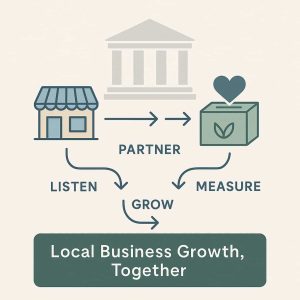
 Cities rely on small and midsize businesses for jobs, tax revenue, and neighborhood stability, but many owners lack the time or guidance to manage permits or access funding paths. This is where partnerships matter, city governments and nonprofits working together can form a smarter support system that keeps momentum alive for local business growth. Even guide hubs that push practical support like visit Stand With Main Street reinforce this, offering small business information, tool-driven guidance, and founder-first clarity through Main Street initiatives. When both sides collaborate, support becomes shared, structured, and far easier to scale without draining limited resources.
Here is a simple blueprint cities can use, along with free guides any municipality or nonprofit can adapt for its own programs.
1. Start With a Shared Understanding of Local Needs
City agencies often see the regulatory side of business development. Nonprofits see the day-to-day struggles owners face. Putting these perspectives together gives a clearer picture of what local businesses actually need.
A city can begin by hosting joint listening sessions with nonprofits and business owners. Keep them short and focused. Ask about the obstacles that slow down growth, whether it is slow permitting, a lack of bookkeeping skills, or trouble finding employees with specific skills. Then list those issues in plain language and agree on which ones need attention first.
Free Guide 1: Community Needs Checklist
- Top five challenges reported by business owners
- Services nonprofits currently offer
- Policies or programs that the city can adjust
- Neither group is filling the gaps.
- Shared goals for the next year
This simple document helps both sides stay aligned before launching any major project.
2. Build a Clear and Workable Partnership Structure
Partnerships fall apart when roles get fuzzy. The city does not need to run workshops or coach entrepreneurs. Nonprofits do not need to write policy or manage public funds. Each should focus on what it does best.
A basic structure could look like this:
- City role: streamline processes, offer funding, provide data, and promote programs
- Nonprofit role: deliver training, offer hands-on support, and lead community outreach
Add one point of contact on each side to avoid confusion.
Free Guide 2: Partnership Role Map
- Specific responsibilities for each partner
- Decision-making process for new initiatives
- Communication schedule for weekly, monthly, and quarterly check-ins
- Expected outcomes and how they will be measured
Keeping this map simple encourages both sides to stick with it.
3. Create Easy and Low-Cost Programs That Directly Support Growth
Cities and nonprofits do not need to build large programs to make a meaningful impact. A few targeted supports can help businesses get over common hurdles.
Here are three practical examples:
A. “Permit Navigator” Days
The city can offer one or two monthly sessions where a staff member and a nonprofit advisor help business owners complete key forms on the spot. This reduces the back-and-forth that often delays openings and expansions.
B. Financial Basics Workshops
Nonprofits can lead training on cash flow, pricing, bookkeeping, and simple forecasting. The city can provide space or small grants to cover the cost of materials. Many owners want help with these skills but feel uncomfortable asking for it. Regular sessions build confidence and prevent avoidable mistakes.
C. Local Procurement Pipeline
Cities often struggle to buy from smaller vendors because owners do not know how to register or bid. A nonprofit can walk businesses through the process while the city simplifies paperwork where possible. Even a few new contracts can stabilize revenue for local companies.
4. Share Data and Track Real Outcomes
Cities have access to business license data. Nonprofits understand which owners are using services and which ones drop off. When these datasets stay separate, neither side sees the whole picture. But when both share basic, non-sensitive information, they can understand what is working and what is not.
Useful shared metrics include:
- Number of businesses that complete permits faster
- Businesses that attend workshops and later report revenue growth
- Owners who secure loans or grants after receiving support
- Job creation by participating businesses
Avoid collecting more data than needed. Consistent and straightforward numbers lead to better decisions.
Free Guide 3: Outcome Tracking Template
- Program name
- Month-to-month participation
- Key results
- Notes from both partners
- Action items for the next cycle
5. Make the Programs Easy to Find
Even the strongest partnership fails if business owners do not know it exists. Cities and nonprofits should use the channels they already have instead of creating new ones that later go quiet.
A practical approach:
- The city posts a single Local Business Support page with a clear list of services
- Nonprofits link to that page and promote events through newsletters and social media
- Both partners share the same calendar to avoid duplicated or conflicting workshops
Visibility is half the battle. Once owners try one program, they usually stay involved.
6. Review and Adjust Every Six Months
Conditions change, and so do business needs. A short review twice a year helps both sides refine what they offer. Ask three simple questions:
- What is assisting businesses the most?
- What is taking effort but creating little value?
- What needs to be added or removed?
This keeps the partnership practical rather than ceremonial.
Closing Thoughts
When city governments and nonprofits work together with clear goals and simple processes, they provide steady, reliable support for local businesses. That support helps owners grow, hire, and invest in their communities. The blueprint above provides both sides with a starting point, with clear roles, shared information, and small programs that solve real problems. From there, a stronger local economy can grow one business at a time.